
-
Home
-
Customer resources
-
High and disputed bills
- Estimated bills and meter reading
Estimated bills and meter reading
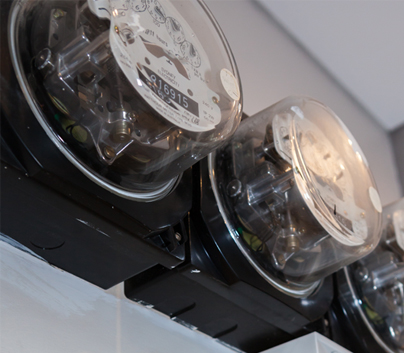
Sometimes a bill is based on an estimated meter read. This means the meter was not read in person.
You may also get a backbill. This is a “catch up” bill when you were undercharged before. If your bill is based on an estimate, this should be clearly shown on the bill. If the estimate is too high or too low, your bill should be adjusted after the next actual meter read.
If you do receive one of these bills, it is important to understand your rights and to understand your responsibilities.
Your supplier’s responsibility for meter reading
Retailers are responsible for reading meters. They also test and replace faulty meters. To do so, they need to have safe and clear access to your meter.
Your responsibility for meter reading
You must provide safe, clear access to your meter. If the meter reader cannot get to your meter, the provider may use an estimated read. This is usually based on your past use, or the use of similar homes.
How often are bills issued?
If you are on a standard retail contract, your electricity provider must send bills at least once every 3 months.
If you are on a market contract, your bill frequency depends on your contract.
For water bills, the bill frequency will be in your customer contract.
Can a meter reader enter my property?
Yes. Under the Electricity Supply Act 1995 (Section 55) and the Gas Supply Act 1996 (Section 56), a provider can enter a customer’s property to read the meter. They do not need to give notice or ask for consent.
How is an estimated bill calculated?
If the meter reader cannot access your meter, your bill may be based on an estimated read.
The estimate may use:
- past meter data for your home, or
- average use for a similar customer (if past data is not available).
After the next actual meter read, your bill should be adjusted. This will match what you really used.
If you were overcharged, your next bill may be lower than usual.
If you were undercharged, your next bill may be higher than usual.
You can read the rules in the National Energy Retail Rules (Clause 21).
A provider can base 3 quarterly bills in a row on estimated reads. If access is still a problem after 12 months, they must arrange an actual read.
Can I provide a self-read to my provider?
Yes, sometimes.
If you have a non-digital meter and you get an estimated bill, you can ask your provider to adjust the bill using your own meter reading.
If they do not accept your reading, the retailer must tell you and explain why.
What is a special meter read?
A special meter read is an actual meter reading taken outside the usual meter reading cycle.
If you think your bill is high because the estimate is wrong, you can ask your provider for a special meter read.
A provider can only charge you for a special meter read if it shows the billing is correct.
How often is my meter read?
Your provider must do its best to make sure your meter is read at least once every 12 months.
If access is a problem, the provider may ask you to make an appointment. You may be charged a fee for this.
I have a digital meter. Why am I getting estimated bills?
Some digital meters in NSW are not smart meters. This means they cannot be read remotely.
A meter reader still needs to visit your property to collect the data.
Sometimes there are problems collecting the data. This may be fixed at the next read. Your next bill may also be adjusted.
Backbilling
If your provider undercharged you, there is a 9-month limit on what they can recover from a small retail customer.
For example, they might send a backbill for 2 years, but they can only charge you for the 9 months before the bill was issued.
However, if you did not allow meter access and you get a catch up bill, there is no limit on how far back the retailer can backbill.
If you get an electricity or gas backbill, you can ask for more time to pay. The extra time should match the period covered by the backbill.
This extra time is not always given automatically. But the provider must give it if you ask.
A retailer must also give you up to 2 years of past billing data at no charge.
If you ask for data older than 2 years, the retailer may charge you the reasonable cost of getting and supplying the old bills.
Read more about meters on the AEMC website.
Case study
Darren lives in a community housing unit. From 2013, his gas bills were based on estimated meter reads.
He thought the estimates were too high. He gave the retailer his own meter reading, but the bills were not changed.
The retailer asked Darren to send a photo of the meter. Darren did not have a phone with a camera and could not send emails. He felt this made it harder for him to fix the problem.
Outcome
We contacted the retailer. Based on Darren’s meter reading, we found the hot water meter was not recording use and needed to be replaced.
The retailer:
- changed Darren’s estimated hot water use to a reasonable level
- rebilled the account from April 2018 to April 2020, which gave Darren a credit of $478
- added another credit of $287 for September 2014 to July 2017 (this was the difference between the old bills and the adjusted amounts)
- offered a $150 customer service payment.
This left Darren with a total credit of $940.
The provider also agreed to replace the meter as soon as possible.