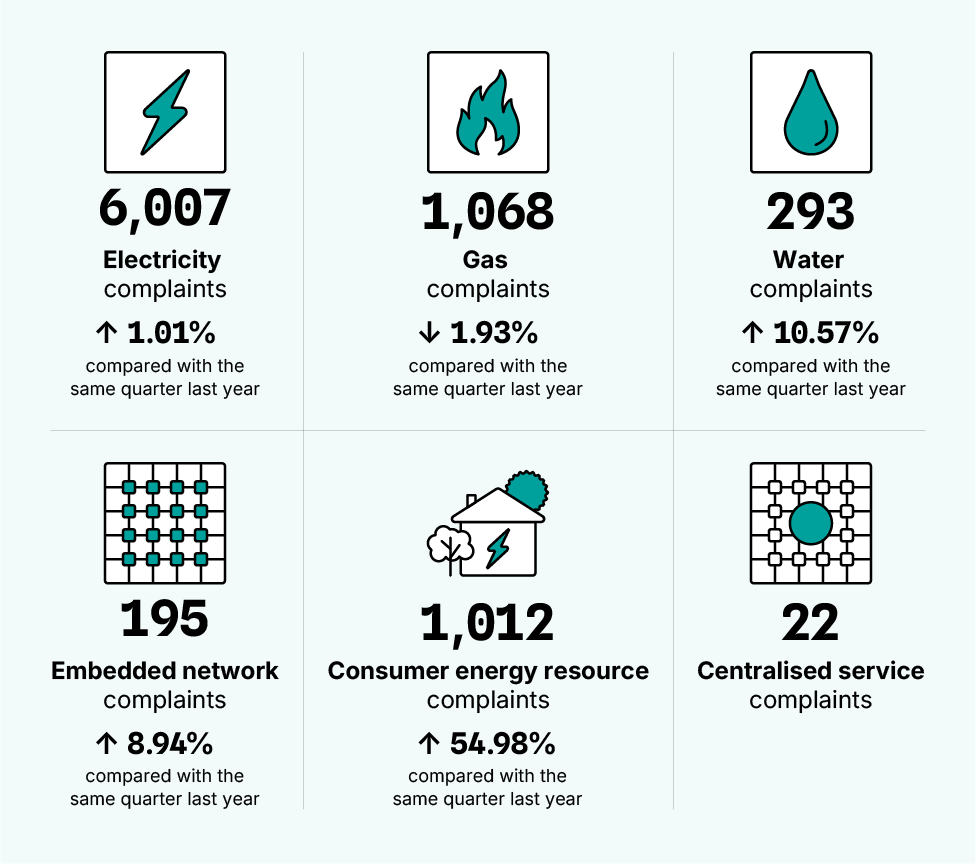
EWON has three licenced water network members, Sydney Water, Hunter Water and Essential Water. EWON also has one local government water member – Shoalhaven Water.
This review did not include private water suppliers under the Water Industry Competition Act 2006 (NSW).
Water connection services
Most water customers have a physical connection between their property and the water or sewerage network. Blockages and overflows at the physical connection point was the most common issue related to the connection point for water networks this quarter. This is often because water and sewerage infrastructure, on both sides of the connection point, are underground, making it difficult to determine where blockages have occurred. When blockages result in overflows from internal plumbing fixtures it is often unclear whether the cause eventuated in private sewer connections or the utility’s assets. Customers also reported receiving conflicting information from private plumbers and water utilities about who was responsible for maintenance.
Other water connection complaints related to metering or compliance obligations associated with new connections.
Water supply
A smaller number of complaints this quarter related to the reliability and quality of water services. These involved low water pressure, interruptions and concerns that network performance had decreased over time. Some customers also wanted reimbursement for costs incurred during service interruptions.
Case study
 Customer with murky water receives rebate for water quality
Tim contacted EWON after experiencing a significant decrease in the quality of his water supply. He complained that his water had become muddy and unsuitable for drinking. Tim said that works by the water provider were being undertaken in the area and he believed this may have caused the problem.
Tim raised his concerns with the water provider but was informed that the water quality was acceptable. He remained concerned, and said that the provider had sent out crews to attend other properties in his street experiencing similar issues.
Tim was unable to shower due to the condition of the water. Following advice from the water provider, he turned on his taps to flush the water through the property’s plumbing. The issue remained unresolved.
EWON referred Tim’s complaint to a senior resolution team at the water provider with the understanding that he could return if the complaint was unresolved.
The water provider contacted Tim and said the water quality issue was probably related to recent works it had completed. The provider had offered him a $10 goodwill credit for the water he used to flush his own private water service and said he was not eligible for a clean water rebate.
Tim declined this outcome and returned to EWON. EWON requested further information from the provider about why Tim had not been eligible for a clean water rebate. The water provider then clarified that a clean water rebate of $47.10 had been applied to Tim’s account at the time of the incident. EWON provided this information to Tim and considered this a fair and reasonable outcome to the complaint.
Water infrastructure
We receive complaints about three different types of network infrastructure – water, sewerage and stormwater. When things go wrong with water network infrastructure, the impact on customers can be significant, because the infrastructure is often underground and so repairs and maintenance can result in disruptive work on private and public property.
Like electricity, infrastructure complaints were the most common water network complaints this quarter. More than half of these relate to sewerage overflows and blockage, typically caused by restrictions to the flow of wastewater through the network cause by tree roots, build-up of fats or oils, broken pipes or heavy rain.
There were three main themes of sewerage overflow complaints: delayed response times, damage to property, and reimbursement amounts. Sewerage overflow complaints can have serious impacts, with customers reporting property damage, health concerns, loss of amenity and disruption to their daily lives. Customers also expressed concern about how water utilities and contractors carried out maintenance and repair work. Damage caused during repairs, failure to restore sites after work and poor-quality repairs were all recurring themes. This often overlapped with sewerage overflow complaints where customers reported inadequate maintenance caused ongoing issues, particularly in heavy rain.